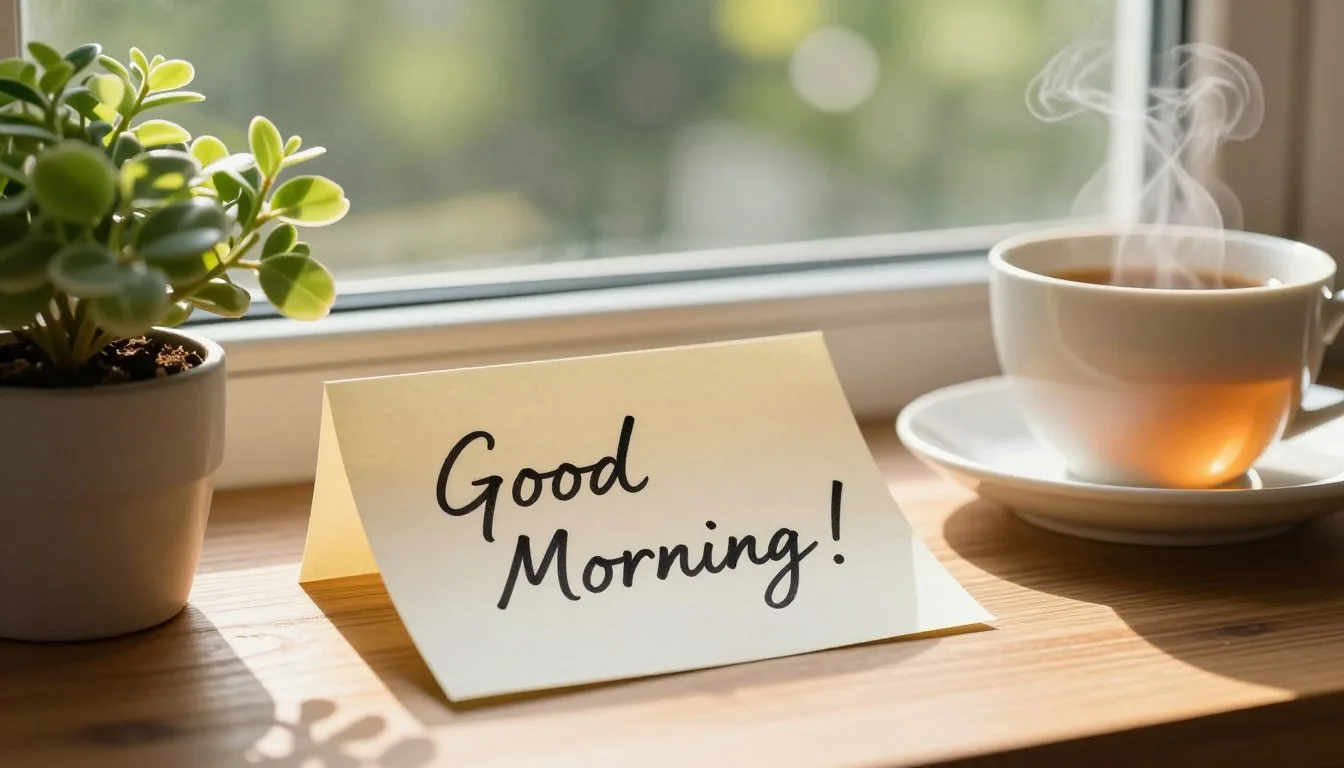
A sweet good-morning wish works best when it sounds like you and names one reason the recipient matters. It can offer a small reminder that someone holds a place in your thoughts.
A thoughtful greeting can be romantic, friendly, playful, or encouraging. The right words depend on your bond, the recipient’s mood, and what feels natural to say.
One personal detail often matters more than an elaborate line. Mentioning a shared moment or a trait you value can make a familiar hello feel warm.
You will find ideas for different relationships and moods, along with ways to make each greeting feel more like your own. A few honest words can add happiness to someone’s life and give today a brighter start.
Choose a message that fits the closeness you share, not just the mood you want to create.
Good Morning Wishes for Someone Special
A simple greeting feels more special when it names one small thing you appreciate about the person. The best morning wishes fit your bond instead of sounding borrowed.
These five wishes can suit someone important in many parts of your life:
- I’m grateful you’re part of my life. I hope today treats you kindly.
- You have handled hard things before. I’m cheering for you today.
- May your day feel peaceful, with room to pause and breathe.
- I keep thinking about our walk by the lake. I hope it makes you smile, too.
- You were on my mind when I woke up. I hope today brings you something good.
Replace a general phrase with one detail that belongs to the recipient. A favorite place, a recent win, or a plan you share can make the wish feel personal.
Choose words that suit the closeness you share, and skip intimate language when warmth is not romantic.
A good-morning guide updated October 16, 2026, offers more than 250 ideas arranged by tone, recipient, and channel. That range can help you find a style that feels right, but your own detail gives a greeting its shape.
For instance, “Hope today goes well” feels more thoughtful when you name the reason: “Hope your first day at the new studio feels welcoming.” Keep the detail kind and easy to understand. A small, true observation can say more than a grand compliment.
Good Morning Wishes should sound like something you might say face to face. If you rarely use formal language, a polished line may feel distant, even when the sentiment is sincere.
Think about how the person usually speaks with you. Someone who likes direct words may prefer a plain “I’m glad you’re in my life” to a long description of your feelings.
Before sending, remove any line you would not naturally say in person.
Short and Sweet Messages for a Busy Morning
If they are already rushing into the day, one sincere sentence is often easier to welcome than a long paragraph. A quick text can still feel warm.
Try one of these short messages when the morning is moving fast:
- Morning! How are you feeling about today?
- You’ve got this, one step at a time.
- Hope your coffee is just right and your morning is kind.
- Sending you a little love before the day gets busy.
- May today bring a calm moment between all the plans.
Many SMS messages work best under 160 characters when encoded in GSM-7. GSM-7 is a character encoding used by many standard SMS messages.
Some emojis and special characters can change the encoding or split a text into more than one message. Keep that in mind when you want a greeting to arrive as one SMS.
WhatsApp connects more than two billion people globally, making it one practical way to send a brief greeting. It also lets you use a simple text when you do not need a longer conversation.
Choose words that feel complete, not clipped. “Good luck today” may be enough for a quick hello, while “Thinking of you” can sound abrupt if someone needs meaningful support.
A short note can be a gentle way to show that you remember an important event. You might mention a meeting, a long shift, or a plan they told you about yesterday.
Do not feel that every greeting needs a question. A message with no request for a reply can be easier to receive when the other person is already busy.
Read the message once on your phone screen to catch awkward abbreviations before you send it.
Romantic Morning Messages for Your Partner
A partner who wakes up beside you may value a quiet expression of gratitude more than a grand declaration. Good Morning Wishes for love work best when they sound like your shared life.
Match the level of intimacy you both use in everyday conversation. Dramatic promises can feel out of place when a relationship is new.
Here are two moments that may call for different words.
When you wake up beside each other
Ordinary routines can carry a lot of affection. A few words about the morning you share may feel more true than a sweeping speech.
You could say, “I love starting the day with you, even when we’re both half awake.” Another option is, “Thank you for making our quiet mornings feel like home.”
If your partner is already up, try, “I like hearing you move around the kitchen while I wake up.” The detail makes the feeling clear without making a simple moment sound staged.
Good morning wishes can also recognize a small act of care. Try, “You remembered to set out my tea, and it made my morning.” It is personal because it names something your partner actually did.
When you are apart in the morning
Distance can make a direct note of affection feel welcome. You might write, “I miss waking up beside you, and I’m looking forward to seeing you tonight.”
Another message could be, “I hope your morning goes smoothly. I can’t wait to hear how your day begins.” It offers closeness without pretending you are together.
If work or travel keeps you apart, a warm note can mark a shared point in the day. “I’ll think of you when I pass our favorite bakery” makes the connection specific.
Every morning does not need a new declaration. A familiar phrase can become meaningful through the care behind it, especially when it fits the way you already speak.
Use the name or affectionate nickname your partner genuinely enjoys, not one that feels copied from a greeting card.
Cute Wishes That Feel Natural
A familiar nickname can turn an ordinary hello into a small sign of affection. A gentle touch of playfulness can suit someone close without making the greeting too sweet.
Try these light messages and adjust them to fit the person:
- Good morning, little ray of sunshine. I hope your day starts softly.
- Morning, favorite person. I’m saving you the last biscuit, as promised.
- May your day bring one lovely surprise and a few easy smiles.
- Your cheerful face could brighten even the cloudiest morning.
- Wishing you a beautiful day with a little extra happiness tucked into it.
A cute greeting works when the nickname and affection fit your relationship. It can suit a partner, sibling, or close friend, as long as it sounds comfortable to both of you.
A small shared habit can make a sweet line feel less generic. Maybe you both water the balcony plants on Sundays, or always save a seat for each other at lunch.
Use that detail with care. A short note such as “Hope the basil survived the night” can feel charming if the person knows exactly why you are asking.
Compliments work best when they are clear and honest. “You make people feel welcome” may mean more than a string of broad praise about someone’s face or style.
Keep the mood easy rather than sugary. A cute wish does not need to call the recipient three different pet names or cover the screen with emojis.
Stacking pet names and emojis can make a message sound unlike you. If that is not how you speak in person, it may not feel sincere on a screen either.
Keep one playful detail and let the rest of the message stay sincere.
Morning Greetings for Friends
A friend facing a demanding day may need to hear that you are in their corner, not that everything is guaranteed to go perfectly. Good Morning Wishes for friends can feel warm and close without sounding romantic.
Name the challenge without predicting the result. A steady message can show care while leaving space for your friend’s own feelings.
For a friend facing a big day
For an interview, you might send, “I know you prepared carefully. I hope you get a chance to show what you can do.”
Before an exam, try, “You’ve put in the work. Take each question as it comes, and message me afterward if you want.”
For a presentation, write, “I’m thinking of you before your talk. I hope the room feels friendly and the first minute goes smoothly.”
A difficult task may call for simple company instead of advice. “Today sounds like a lot. I’m here if you want to vent later” leaves the choice with your friend.
For an everyday check-in
A low-pressure greeting can bring a friend to mind without asking them to stop what they are doing. Try, “Morning! Hope something good finds you today.”
You could also say, “I’m glad we’re friends. No need to reply now, but tell me how your week is going when you have time.”
If you want a reply, make it easy to give. “What’s one good thing on your schedule today?” is lighter than a long list of questions.
A familiar inside reference can make a check-in feel like yours, but only use one your friend will understand. An old nickname for a shared place may bring back a happy memory; an unclear reference can leave them puzzled.
Friends may welcome affection, but the words should still sound like friendship. “I appreciate you” is direct and caring without suggesting romance.
Make a check-in easy to answer, especially when your friend is likely to be busy.
Positive Messages for a Fresh Start
A hopeful message can encourage someone without asking them to pretend everything is easy. Inspirational good morning words can offer support and room for a hard day.
Positive good morning wishes should encourage a next step without promising that a positive attitude will erase serious trouble.
Encouragement before a challenge
Recognize the effort, then offer one realistic hope. For someone facing a tough task, you could write, “You’ve kept showing up for this. I hope you find a clear first step today.”
Before a hard conversation, try, “You’ve thought about what you need to say. I hope you get the time and space to say it clearly.”
If someone is working through a setback, avoid telling them everything happens for a reason. A kinder note might be, “This has been a lot to carry. I hope today gives you one quiet moment.”
Words that notice effort can help without placing a demand on the person. “You don’t have to solve it all this morning” may feel more supportive than “Just stay positive.”
Hope for an ordinary new day
A new day can offer small chances, even when nothing feels fresh or easy. You might say, “I hope one kind moment finds you today.”
Gratitude can stay simple: “May you notice one thing worth enjoying today, even if the rest feels routine.” It does not ask the person to feel grateful for hardship.
For a gentle start day message, try, “Choose one thing you can manage, and let that be enough for now.” This points toward action without turning the morning into a test.
Another option is, “May your day be filled with a little more calm than yesterday.” A modest wish can feel believable when someone is tired or facing a setback.
Encouragement should leave room for the person’s real mood. Someone who feels worn down may need a quiet wish, not a call to find extra energy.
Pair encouragement with one realistic wish, such as finding a calm moment or completing one important task.
Funny Morning Messages to Make Them Smile
A gentle joke about the alarm can earn a smile when you both share the same early-morning struggle. Keep the humor kind so the greeting feels like company, not a dig.
Try these playful lines with someone who enjoys a bit of morning silliness:
- My alarm and I are still negotiating. It thinks we should be awake; I disagree.
- Rise and shine! I’ll be ready for serious conversation after coffee.
- I’m moving at breakfast speed today, which is slower than walking speed.
- I’m pretending to enjoy this early start. My face has not joined the act yet.
- May your workday end before your second cup of coffee gets cold.
Do not joke about someone’s sleep, appearance, or workload when you do not know how they feel about it. A line that seems harmless to you could touch a sore spot.
Different kinds of humor land with different people. One friend may like dry comments about an alarm, while another may prefer gentle silliness about a slow breakfast.
Use a joke you would be comfortable saying aloud. Text can hide your expression and tone, so sarcasm may come across as criticism when you mean it as a tease.
Also consider the day ahead. Someone rushing to care for a child or get to work may not have the energy for a long setup. A one-line joke gives them room to smile and move on.
You do not need a punchline to make a greeting feel warm. A plain “Hope your morning starts gently” can be a better fit when the other person seems tired.
If you are unsure whether a joke will land, send a kind greeting without the punchline.
A quotable greeting is easiest to share when its central thought fits in one breath. Short lines about kindness or hope can work well in a text or card.
Good Morning Wishes with quotes can be original wording, not a line credited to a famous person.
Original lines with a quotable feel
These fresh lines are written for sharing, rather than taken from public figures:
- A new day gives kindness another place to begin.
- Gratitude can make an ordinary morning feel more open.
- Hope often starts as one small thing you choose to try.
- Let today hold one kind moment for you and one for someone else.
- Life feels lighter when we notice the good already near us.
A short thought often works better than a long passage. It is easier to read quickly and leaves room for your own greeting beside it.
You can copy an original line into a text or write it inside a card. A brief message can feel personal when you add a few words about why it made you think of someone.
If you share a line under another person’s name, check both the wording and the attribution first. Many familiar sayings get repeated with uncertain names attached.
When you cannot confirm who wrote the words, leave the name off. That lets the line stand on its own without passing along a claim you are unsure about.
Consider whether the thought suits the person’s day. A line about fresh hope may feel welcome after a good night’s sleep, but too bright after a hard loss.
A quote-style greeting should not sound like a lecture. Choose words that offer a thought, then let the recipient take them in their own way.
Leave off an author’s name unless you are confident the words and attribution are correct.
Morning Blessings That Mention God
A simple prayer for peace can make a faith-based morning greeting feel caring rather than forceful. Good Morning Wishes that mention God should respect both people’s comfort with faith language.
These five original examples offer care without promising a certain result:
- May God bring you peace and steadiness as this day begins.
- Thank God for a new morning and the chance to meet it together.
- May God give you strength for the work ahead.
- I pray your work goes well and that you find support along the way.
- May hope stay close to you through whatever today brings.
Use faith language only when it feels welcome to both you and the recipient. A warm blessing should offer comfort, not put pressure on someone to share your beliefs.
A greeting can mention prayer without claiming that a specific outcome is certain. “I’ll pray for a peaceful day” expresses care; “God will make everything go your way” promises more than you can know.
Think about the recipient’s faith and the way you speak together. A close relative who shares your beliefs may welcome a direct blessing, while a colleague may prefer a more general wish.
You can also keep the wording simple. A short prayer for calm may feel more personal than a long string of religious phrases copied from somewhere else.
Faith-based wishes can offer hope during an ordinary day, too. They do not need to be saved for illness, worry, or a major event.
Choose language that offers comfort without placing expectations on the recipient.
Islamic Morning Remembrances and Duas
Morning adhkār are best recited between Fajr and sunrise, though they can be recited later if that is not possible.
A steady, manageable routine is better than abandoning the remembrances when you cannot complete them all. Islamic Good Morning Wishes can be a kind personal greeting, but an ordinary greeting is not a prescribed dua.
When to recite morning adhkār
The preferred time for morning adhkār is after Fajr and before sunrise. If that time passes, recite them later when you are able.
Consistency matters more than finishing every remembrance at once. Keep the part you can manage, then build your routine around what fits your mornings.
A personal message can still express care. You might wish someone a peaceful day without presenting your own words as a required prayer or part of Islamic practice.
A short dhikr for a consistent routine
A brief remembrance of God is called dhikr. “Lâ ilâha illallâh” may be recited 100 times as a morning dhikr.
The stated rewards include 100 good deeds, the erasure of 100 sins, and protection from Shaytan until evening. Sahih al-Bukhari and Sahih Muslim name these rewards.
Keep the wording and the stated number clear when sharing this practice. Do not add a translation or further religious claims that are not part of these details.
Some mornings allow time for a longer routine; others may be crowded with family or work. A short, consistent practice can be easier to keep than a plan that asks too much.
Good morning wishes and morning adhkār serve different purposes. One is a personal greeting; the other is remembrance with its own place in Islamic practice.
Begin with a manageable portion and keep the wording and religious claims precise.
Good Morning Images and Messages
A familiar photo can make a short morning greeting feel more personal than a decorative background alone. Choose a visual that suits the person and leaves your words easy to read.
These image ideas can pair well with a simple message:
- A personal photo of a place or moment you both remember.
- A sunrise with a clear sky and a little space for text.
- A simple floral image in colors the recipient enjoys.
- A coffee or breakfast scene for someone who likes a slow start.
- A devotional image with meaning in the recipient’s culture or faith.
Keep the words legible and the image appropriate to the person receiving it. Avoid placing text over a busy part of the picture, where it may be hard to read.
HD Good Morning Wishes can include devotional imagery. The Hindu Good Morning Images app lists more than 1,000 HD good-morning images, including images with mantras and shlokas.
Updated on October 8, 2026, the app includes images of Ganesha, Shiva, Krishna, Hanuman, Rama, Lakshmi, Durga, and Saraswati. It supports sharing through WhatsApp, Telegram, Facebook, and email.
A devotional visual can carry meaning, so choose one that fits the recipient’s beliefs and customs. If you are unsure, a sunrise or simple flower is a more general choice.
Personal photos can feel warm, but think about who else might see them before you send one. A shared group chat may call for an image that feels comfortable for everyone there.
Check that the image and any devotional text suit the person receiving it before sharing.
How to Make a Morning Message Feel Personal
The fastest way to make a familiar greeting sound new is to connect it to something happening in the recipient’s life today. One real detail can make a message feel more personal than a polished line.
Good Morning Wishes in a new style can pair that detail with a sincere feeling and a realistic hope for the day.
Start with one detail only they would recognize
Choose one shared memory, current plan, or small thing the person mentioned. A specific detail gives the greeting a clear reason to exist.
You might mention the book they started, the garden they are tending, or the trip they are planning. “Hope you get time to read on the train” is more personal than “Have a great day.”
A shared memory can work when it brings warmth rather than confusion. You could refer to the rainy walk that ended at a tiny café, if you both still talk about it fondly.
Plans give you an easy way to show that you listened. If the recipient told you about a family visit, ask whether they found time to pack before work.
Some details should stay private. A health issue, family strain, or personal worry may appear on a shared screen, so leave sensitive matters out of casual messages.
Match the tone to your relationship
A partner may welcome direct affection, while a friend may prefer warmth with a little humor. A relative might enjoy a familiar family phrase, and a colleague may prefer a brief, polite hello.
Adjust how direct you are, too. If you usually speak openly with someone, say what you appreciate; if your conversations are more reserved, keep the warmth simple.
Humor works best when it fits your shared style. A line that makes one friend laugh may feel too familiar in a message to a manager or a new colleague.
Think about where the message may appear. A private note can be more personal, while a group chat calls for wording that will make sense to everyone who reads it.
Read your draft as if the recipient were sitting beside you, then remove any wording that feels forced.
Conclusion
The best greeting is the one that sounds like you and makes the other person feel remembered. One true detail often matters more than a long message.
A playful, affectionate, or encouraging note should fit the recipient and the relationship you share. You do not need perfect wording to make a kind thought clear.
Choose one person, add one detail that is genuinely theirs, and send a message they will be happy to wake up to.