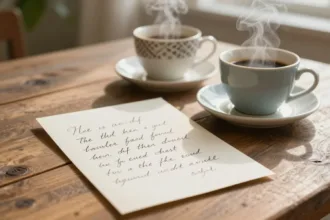
The best miss-you message for a long-distance relationship names one real detail you miss or one feeling your partner should know. A few honest words can make distance feel smaller during an ordinary day.
A message can show affection, name a small absence, reassure your partner, or make them smile. The 77 original messages here cover 10 situations, from everyday closeness to the return home after a visit.
You can send a line as written or change it to match your life together. These are options, not rules about how love should sound, and a simple message can still carry care.
Choose the entry that matches what you feel right now, not the one that sounds most dramatic.
How Can You Make a Miss-You Text Feel Personal?
A text feels personal when it links one feeling to one detail your partner would recognize. That small link can make a ready-made message feel like your own words.
Use a feeling, a specific detail, and an optional next step. Keep the note close to how you normally speak, so the message feels warm rather than carefully staged.
Add a detail only the two of you would recognize
Start with the feeling you want to share: affection, pride, longing, or a little sadness. Add a memory or detail from your partner’s day, then decide whether an invitation would help.
“I miss you” is true, but it could fit almost anyone. “I passed the coffee stop where we argued about cinnamon, and I wished you were there” points to a moment only you share.
A useful edit has four steps:
- Name the feeling you want your partner to understand.
- Add a shared memory or a detail from your partner’s day.
- Remove words that do not sound natural when you say them.
- Check the phone preview and your partner’s local time before sending.
Let one real detail carry the feeling; extra polish cannot make a message more honest.
Choose a message length that fits the moment
A short text works when you want to share one thought without starting a long conversation. A longer note or letter can hold more context, such as what has changed since your last visit.
Longer messages or letters can be about 100-250 words. Use that space for a memory, a feeling, and what you hope to share next, rather than repeating the same point.
Some moments call for a message that your partner can read between tasks. Other moments leave room for a thoughtful letter that describes how the day felt from your side.
Before sending, remove any phrase you would not naturally say aloud.
Miss You Messages for Long Distance Relationship
A sweet message lands best when it says what you value about your person, not just that you miss them. Warm, clear words can make a routine check-in feel close without turning it into a speech.
Choose affection that fits the relationship you share. The messages below include everyday love and separate options for a boyfriend or girlfriend, without assuming every couple uses those labels.
Sweet texts for everyday closeness
Sweet text messages for long-distance relationships can work as simple check-ins during a busy day. These lines share care without asking your partner to pause everything for a long reply.
- I like knowing you’re part of my day, even from a different place.
- My favorite part of today was telling you about it.
- I miss your laugh, but I’m glad I still get to hear it through my phone.
- Distance changed our routine, not how much I care about you.
- Some days feel brighter because I know I get to talk with you.
You can change “talk” to “text” or “call” if that better fits the way you connect. A small adjustment makes the line sound like your relationship, not a greeting card.
A long-distance love message for him
A long-distance love message for him can name a quality you admire, rather than relying on a broad romantic claim. Try one of these if it reflects the person he is.
- I miss you, and I keep thinking about how steady you were when my week got messy.
- Even from here, I can see how much care you put into the people around you.
- I love how you keep showing up for the things that matter, even on tiring days.
- I miss having you beside me, and I’m proud of the way you handle the hard parts.
- You make space for my worries without making me feel like a burden. I miss that most today.
Each message points to an action or quality, so it can feel more personal than a general compliment.
A long-distance love message for her
These options for a girlfriend focus on her presence, care, and the specific place she holds in your life. Choose one that reflects what you genuinely notice about her.
- I miss the way you make an ordinary story feel worth telling.
- Your kindness stays with me long after our call ends.
- I love how you can make room for joy, even when life feels crowded.
- I miss sharing the little wins with you first.
- My heart feels close to you, even when our days happen in different places.
Choose a line that reflects something you genuinely appreciate about your partner.
What Can You Say When You Miss the Small Moments?
Missing a shared coffee run can sting more than missing a big occasion. Ordinary routines give a relationship its shape, so their absence can stand out during a quiet day.
Name the everyday thing you wish you could share. Missing your partner is not the same as doubting the relationship; the message can hold sadness without questioning your bond.
These notes bring a real place or habit into the conversation. Swap in your own errands, meals, or familiar corners when a detail fits better.
- I passed the bakery where we always stop, and I miss making that small detour with you.
- I had coffee alone today and caught myself saving the funny part of the story for you.
- Running errands would feel less dull if you were choosing the playlist from the next seat.
- I miss the quiet part of the evening when we put our phones down and just sit together.
- There was a little thing I wanted to tell you on the way home. I still want to hear your take.
Longer messages for her when missing her feels heavy
When you want to say more, let the feeling be honest without turning it into a fear about the relationship. These messages offer a fuller account of the day and the place she holds in it.
- I miss you more than I expected today. The kitchen felt too quiet while I made dinner, and I wished I could tell you every small detail. I know we are still close, even from here.
- I miss the way we wind down together after a full day. I wanted to hear about your errands, tell you about mine, and let the evening slow down beside you. Being apart feels hard tonight, but my care for you feels steady.
- I keep noticing the little spaces where you belong in my day. I miss your voice while I make coffee and your company when I get home. I wanted you to know the distance feels real today, without making it mean anything is wrong between us.
- I miss the comfort of doing nothing important with you. We could share a meal, talk about a small thing, or sit in the same room without filling every pause. I’m grateful we have those memories, and I look forward to making more.
- I miss way more than the big plans. I miss the familiar walk, the quick stop for groceries, and the calm at the end of the day. I’m telling you because I want you to know what feels absent today, not because I doubt us.
Add the actual routine or place you miss so the message could not be mistaken for a generic greeting.
Which Short Messages Work for a Quick Check-In?
A short text can carry warmth without asking for a long reply. One clear thought can let your partner feel remembered during a busy break, a commute, or the time before a planned call.
Keep each message to one easy-to-send text bubble. Brief does not have to mean emotionally vague; a few direct words can show where your heart is today.
Pick the line that fits the time your partner has to respond:
- One day closer.
- Same love, different place.
- Thinking of you from here.
- A quick note to say you matter to me.
- Sending a little love between tasks.
- Saving you a thought in the middle of my day.
- Can’t wait for our call later.
- Hope this break gives you a chance to breathe.
- Just checking in with a small hug from afar.
- Here, missing you and cheering you on.
These texts work when a long exchange would interrupt a commute or a packed stretch of work. Your partner can take in the message without feeling asked to answer at once.
A one-line note can still name a real feeling. “I miss you” carries more warmth when it comes from a person who knows your day and shares your life.
Pick a line that fits the time your partner has to respond.
What Can You Send as a Good Morning Message?
A morning note can make your partner feel included before the day’s routines begin. A small greeting can share warmth, offer encouragement, or leave room for a later conversation.
Shape the message around the morning your partner will actually have. You might be reaching for coffee while your partner is already at work, so keep different routines in mind.
These good morning messages use coffee, the weather, or a plan to talk later:
- Good morning, love. I’m making coffee and wishing I could pour you a cup, too.
- Good morning. I hope today’s weather gives you a little reason to step outside.
- Good morning, my favorite person. I hope the day starts gently and gets better from there.
- I’m heading into my morning while you may still be winding down. Read this whenever it suits you: I’m thinking of you.
- Good morning. I hope your coffee is strong and your first task is kinder than expected.
- Good morning, love. Would you like to talk later, if your day leaves room?
- I hope your morning feels calm. I’ll be glad to hear about it when we catch up.
A note that mentions a later call can feel welcoming when it leaves your partner free to say what works. It also gives you both something to look forward to during the day.
Keep a morning greeting considerate of the time your partner will actually read it.
What Can You Text Before Your Partner Goes to Sleep?
At night, a calm good-night text can offer closeness without demanding a late conversation. A quiet closing note can be enough when one of you is ready to sleep.
Make affection clear without asking your partner to stay awake or reply right away. A gentle message can bring thoughts of home into a quiet room, even when you are far apart.
Use one of these good night messages to close the day with care:
- Good night, love. I hope your room feels calm and your sleep comes easily.
- I’m thinking of you as the house gets quiet. Sleep well, and answer tomorrow if you like.
- Good night from my side of the miles. You’re close in my thoughts.
- I hope you feel at home wherever you rest tonight. I’m sending love from here.
- Rest now, my love. I’ll be happy to talk when we both have time tomorrow.
- The room is quiet here, and I’m glad I got to hear your voice today. Good night.
- Good night. We can pick up our conversation when the day is kinder to both of us.
A good night message does not need to start another exchange. It can simply mark the end of the day with care and give your partner space to rest.
Let the message end warmly without turning bedtime into another obligation.
What Messages Build Trust Across Distance?
Trust-building words pair affection with a clear, believable assurance. Steady care can help your partner feel your presence, even when physical closeness is not possible.
Say what you can follow through on. The full collection has 77 original messages across 10 situations, including 10 for trust and reassurance, rather than 77 trust messages alone.
Deep messages about commitment and trust
These messages speak about the choices you make and the place your partner holds in your life. Use them when you mean the promise behind the words.
- I keep choosing this relationship, including on the days when distance makes it harder.
- The miles limit where I can be, not how much I care about what matters to you.
- I want us to keep building a life that feels honest for both of us.
- Being apart does not erase the way we show up for each other.
- I’m here for the real parts of this relationship, not only the easy days.
Reassurance that feels steady, not dramatic
A clear reminder can offer comfort without promising that nothing will ever change. These options focus on emotional presence rather than grand claims.
- You still have my attention, even when we are sharing a day from different places.
- I care about what you’re carrying, and I want to hear about it when you’re ready.
- We do not have to solve the distance tonight to stay close to each other.
- I’m thinking of you with care, not keeping score of who reaches out first.
- You can count on me to be honest about what I can offer.
Distance can limit physical presence while leaving room for emotional presence through attention, care, and follow-through. A message begins that connection, but your choices give the words weight.
Use only reassurance you can support through your actions.
What Can You Say When Your Partner Has a Hard Day?
When your partner has a hard day, the most supportive text asks what would help rather than rushing to fix it. Care starts with listening, even when you cannot offer a hug in person.
Ask what kind of support your partner wants before choosing a response. An honest, simple message may fit better than a grand romantic speech.
Emotional support when you cannot be there in person
Work trouble, illness, and family strain can each call for a different kind of care. These messages offer listening, a call, or quiet company without pushing your partner to explain more than they want.
- I’m sorry work hit so hard today. Would you like to tell me about it, or would a quiet call feel better?
- I hate that you’re feeling unwell from this far away. Can I bring you company on video, or would rest help more?
- Family strain can take a lot out of you. I’m here to listen, and you do not need to make the story neat.
Reassurance when distance feels especially difficult
Some days, the miles make comfort feel out of reach. A specific offer lets your partner choose what would feel manageable right now.
- I wish I could sit beside you after this day. Would you like to talk, or should we stay quietly on video?
- You do not have to make me feel better about this. I can listen while you let the day out in your own words.
- I can call for ten minutes, listen without offering fixes, or give you space. Which would help most today?
A partner may want to talk, share a quiet video call, or pause before replying. A good offer leaves those choices open instead of treating one response as the right one.
Offer one specific form of support your partner can accept or decline.
How Can a Playful Text Ease the Distance?
A shared joke can make the miles feel less serious for a moment. Light humor gives you both a reason to smile without asking every conversation to carry a big feeling.
Keep teasing gentle and familiar. A joke should fit your usual dynamic, especially when your partner is having a difficult day.
Try these playful messages when you both have room for a little fun:
- I saw your favorite snack and resisted buying two. Please recognize my heroic self-control.
- Our reunion plan needs one serious thing: you have to let me win at choosing the first meal.
- I miss your extremely specific way of arranging the pillows. The sofa looks confused without you.
- Our shared joke is still funnier than it should be, which feels like a long-distance talent.
- When we meet again, I’m claiming the first hug and the best seat beside you. You may appeal in person.
Playful words can open a light conversation about a shared joke, an everyday quirk, or a plan you both enjoy. Keep the humor aimed at a harmless habit, not a sore spot.
Choose humor your partner would recognize as affectionate, not dismissive.
What Can You Text After Saying Goodbye?
The first quiet evening after a visit often makes the goodbye feel real. The change in your space can bring back the hug at the station, the meal you shared, or the calm of sitting together.
You can name the sadness and still be grateful for the time together. A message does not need to make the goodbye feel easy to be kind.
These post-visit messages hold ordinary memories rather than big promises:
- I keep thinking about that hug before we left. I miss you already, and I’m glad I got to feel your arms around me.
- Our last meal together was so ordinary, which is why I keep replaying it. I’m grateful we had that time.
- The evening felt peaceful with you beside me. The quiet feels different now that you’re gone.
- I miss you in the space beside me, and I’m holding on to how good it felt to share those small hours.
After a visit, a familiar room can feel changed even when every object stays in place. A true detail gives the message a place to land.
Name one moment from the visit that you are glad you shared.
What Can You Say Before Your Next Visit?
A reunion message is strongest when it looks forward to ordinary time together, not just a perfect date. Everyday plans can make the miles feel more manageable while leaving room for real life.
Build anticipation around what you can plan together. A psychology overview published in 2026 says couples without a clear timeline for reuniting report significantly lower relationship satisfaction.
These messages can fit a confirmed trip or start a talk about timing:
- I’m looking forward to travel day, but I’m just as excited to have an ordinary breakfast with you again.
- I keep thinking about our first hug when we see each other. Let’s leave some space for the small plans, too.
- Could we talk this week about a realistic date for seeing each other? I want a plan that works for both of us.
Anticipation should not turn the visit into a test of whether every minute feels perfect. Travel can be tiring, plans can shift, and a quiet hour together still counts.
When the timing is still undecided, ask to discuss a realistic reunion plan together.
How Often Should Long-Distance Couples Message?
A workable starting rhythm is one brief daily check-in and one or two planned longer conversations each week, adjusted to both partners’ schedules. That is a starting point, not a rule for every long-distance relationship.
Agree on a rhythm together instead of treating frequent messages as proof of love. Constant check-ins can feel burdensome, while a planned time to connect can leave room for work, study, and rest.
Agree on a contact rhythm that suits both partners
Partners can talk through four parts of staying in touch:
- Frequency: how often you want a quick check-in or a longer conversation.
- Preferred methods: whether texts, voice calls, or video calls feel best.
- Response times: what a late reply means during work, study, or sleep.
- Important moments: when each of you most needs connection or support.
A 2021 online survey included 647 emerging adults who were in a relationship or dating someone; 36.5% were in a long-distance relationship. Long-distance participants texted, voice called, and video called more often than geographically close participants.
Among long-distance participants, more frequent and responsive texting predicted significantly greater relationship satisfaction. That link did not appear among geographically close couples, and it does not show that a text causes satisfaction.
Video-call use had no significant link to satisfaction in either group. Voice-call frequency linked with greater satisfaction among geographically close couples, but not among long-distance couples.
A shared ritual is a planned activity that recurs, giving you a familiar way to spend time together. It can be a standing video date, the same show at the same time, or an online game.
You could also eat the same meal over video or save one evening each week for a shared activity. A regular time can reduce the urge to check in all day or late into the night.
Choose a rhythm together, then change it when work, study, or time zones change.
Couples without a clear timeline for reuniting reported lower relationship satisfaction in a 2026 psychology overview. A recurring ritual can give you something shared to look forward to while the next visit takes shape.
Choose a rhythm together and revisit it when work, study, or time zones change.
Conclusion
A thoughtful message cannot shorten the miles, but it can remind your partner that they belong in your everyday life. One sincere detail can make a copied line feel personal and open a conversation.
A text supports the wider communication you build together; it cannot replace the care, listening, and shared choices that keep a relationship close. Your words can still offer a small sense of home during an ordinary day.
Pick one line, add a detail only the two of you share, and send it when it feels right.