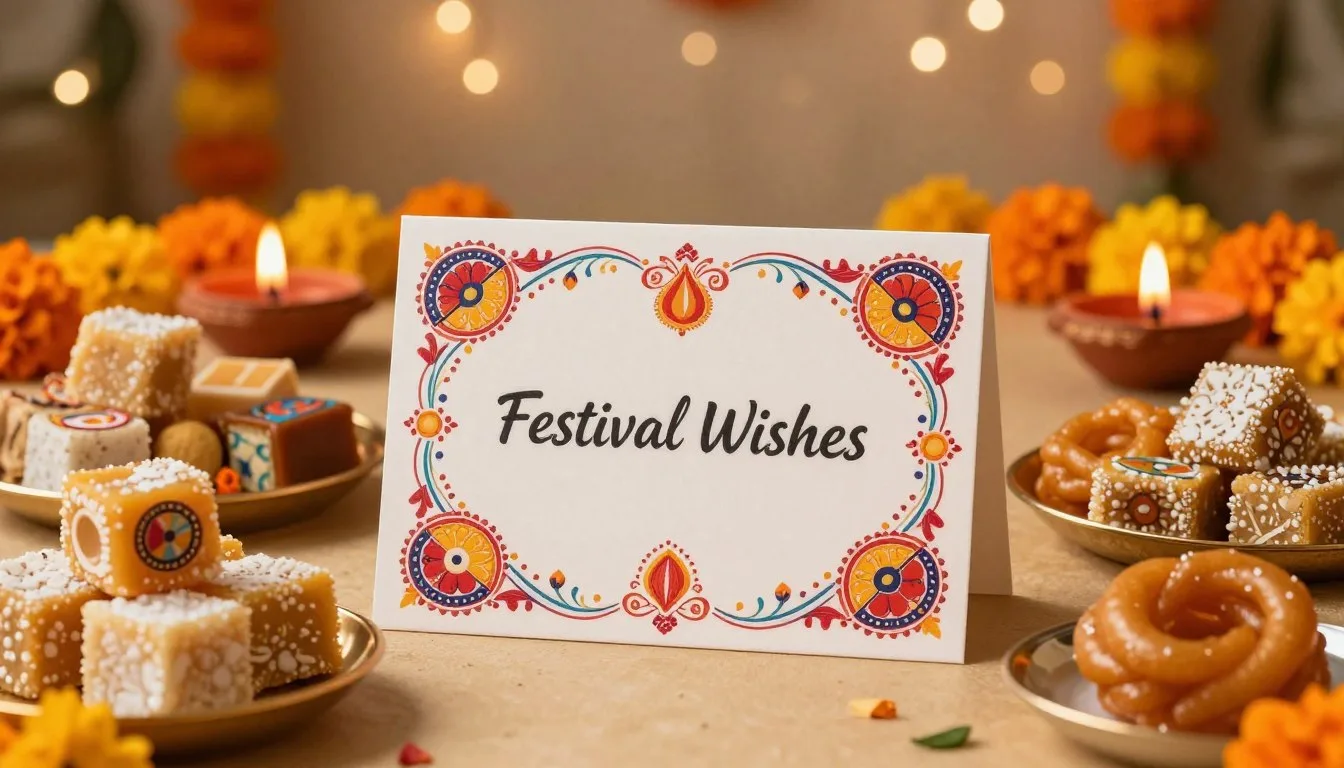
The best Diwali greeting is one that sounds natural for your relationship and carries the warmth you want to share. A festal greeting is a message or greeting shared for a festival. Choose wording that fits your recipient, whether you want a ready-to-send wish, a personal note, or a short caption.
For Diwali 2026, you might send family a heartfelt message, share a quick note with friends, or post a bright caption for loved ones. The right choice depends on how close you are and how you usually speak to each other. A formal line may suit a work contact, while a familiar phrase can feel right at home.
Use these Festival Wishes as a starting point, then adjust the tone to match your celebration. You do not need to write a long message to make someone feel remembered. A small personal touch can make even a short greeting feel warm. A specific personal detail makes a familiar greeting feel meant for its recipient.
What Diwali Means Across Communities
Diwali brings together a message of light and renewal with observances that differ across communities. Festal greetings put that shared meaning into words, while a festival day is a day set aside for observance and gathering.
Light, hope, and good overcoming evil sit at the heart of Diwali’s message. “Celebration” is a fitting one-word description of a festival, though each community gives the day its own customs and meaning.
Stories of light, knowledge, and victory
Diwali is linked with the victory of light over darkness, knowledge over ignorance, good over evil, and hope over despair. Northern Indian traditions connect the festival with Lord Rama’s return to Ayodhya after defeating Ravana. Southern Indian traditions connect it with Lord Krishna’s victory over Narakasura.
Diwali is significant to Hindu, Jain, Sikh, and Buddhist communities, which observe it through distinct traditions. Diwali’s community traditions reflect different stories and practices, so one religious reference will not suit every recipient.
Use a tradition-specific reference only when you know it fits the recipient’s community.
Diwali traditions often bring family and friends together. People light diyas, make rangoli, share sweets and gifts, and gather for prayers or a meal.
Many Hindu families pray to Goddess Lakshmi and Lord Ganesha during evening worship. These home customs give a greeting a personal feel, especially when you know how the recipient marks the day.
A message about light or hope can suit many people, while a prayer or deity name carries a more specific faith meaning. Choose your wording with care, and let the recipient’s own customs guide you.
When Is Diwali 2026, and How Do Its Dates Work?
In India, Diwali 2026 falls on Sunday, November 8. The five principal observances fall across November 6-11, with Choti Diwali observed on the evening of November 7.
The observances are Dhanteras on November 6, Choti Diwali on the evening of November 7, and Diwali on November 8. Govardhan Puja falls on November 10, followed by Bhai Dooj on November 11.
Diwali dates change each year because they follow the Hindu lunar calendar. Lunar dates, called tithis, can begin or end at different clock times. The relevant morning or evening period helps set each observance, so the five principal days can span more than five consecutive calendar dates.
That timing matters when you plan a visit, prayer, or message for a particular observance. For example, a greeting sent for Lakshmi Puja should match the Lakshmi Puja timing your family follows. Check a local calendar for the observance details relevant to your own plans.
Festival Wishes in English for Any Recipient
A simple “Happy Diwali” is a warm, clear greeting for almost any recipient. Direct and friendly English greetings can suit a card, a text, or a quick note to family.
Choose a simple line when you want a greeting that feels easy and welcoming. A longer wish can add warmth or name a hope for the season. A general greeting is useful when you are unsure how religious the recipient’s celebration is.
These ready-to-send wishes offer different levels of detail:
- Happy Diwali!
- Joyous Diwali to you and your loved ones.
- May the light of the diyas guide you towards wealth and prosperity. Happy Diwali!
- Have a happy, safe, and blessed Diwali!
- May the Diwali lights surround you with happiness and positivity. Happy Diwali!
The first line is short enough for a quick message, while the longer wishes carry a more thoughtful tone. For a card, you can add a personal sentence after the greeting, such as a note about a shared celebration.
“Happy Diwali” works well when you want to keep the message open to many beliefs and customs. Use an expressive wish when you know the person will welcome its focus on blessings, prosperity, or light. For someone you do not know well, choose a short, broadly welcoming line.
Hindi Diwali Greetings and Their Meanings
“Shubh Dipawali” is a simple Hindi way to say “Happy Diwali.” Hindi greetings can make a message feel familiar, but the meaning should still fit the person receiving it.
Use a brief greeting for a simple note and a longer wish when you want to share a fuller thought. The transliterations below show how each line sounds in Roman letters.
Simple Hindi greetings
Choose one of these short greetings for a card or text:
- “Shubh Dipawali” (शुभ दीपावली) means “Happy Diwali.”
- “Diwali ki hardik shubhkamnayein” (दिवाली की हार्दिक शुभकामनाएं) means “Wish you a happy Diwali.”
- “आनंदमयी दीवाली” (Aanandmayi Diwali) means “Joyous Diwali.”
- “दीपावली की हार्दिक शुभकामनाएँ” (Deepawali ki haardik shubhkaamnayein) means “Heartfelt Diwali wishes.”
Wishes for blessings, light, and prosperity
Longer wishes can express a hope for joy, good fortune, or divine care:
- “रोशनी का यह पर्व आपके जीवन में खुशियाँ लाए” (Roshni ka yeh parv aapke jeevan mein khushiyan lae) means “May the festival of lights bring you joy.”
- “लक्ष्मी माँ की कृपा बनी रहे” (Lakshmi maa ki kripa bani rahe) means “May Goddess Lakshmi bless your home.”
- “आपके जीवन में उजाला और समृद्धि आए” (Aapke jeevan mein ujala aur samriddhi aaye) means “Wishing you light and prosperity.”
- “लक्ष्मी-गणेश का आशीर्वाद मिले” (Lakshmi Ganesh ka aashirvaad mile) means “Blessings of Lakshmi and Ganesha to you.”
Use a line that sounds natural when you say it aloud. Match a blessing-focused greeting to a recipient who welcomes religious language.
What Should You Write to Family, Friends, or Colleagues?
A family message can feel more personal when it names the shared warmth of the celebration. A detail that belongs to you both can make familiar wording feel less like a mass-forwarded note.
Add the recipient’s name where you would naturally say it aloud. A name at the start can feel warm, while one at the end can make a short sign-off more personal.
Messages for family and friends
These wishes focus on shared time, close ties, and a friend’s presence:
- “Wishing our family a Diwali filled with laughter, sweets, and togetherness.”
- “So grateful for your friendship. Wishing you a bright and peaceful Diwali.”
You can make the family line your own by naming a shared meal or a favorite family ritual. A friend’s greeting may sound more sincere when you add one reason you value that friendship.
A wishes name line can be as simple as the name you use in conversation. If you are sending a printed note, a family photo or photo frames from past celebrations may bring back a shared memory.
Faith-inspired and work-appropriate messages
Choose a faith-inspired line when you know it will be welcome:
- “May Goddess Lakshmi bless your home with abundance, kindness, and steady joy.”
- “Wishing you a safe, joyful, and blessed Diwali celebration.”
For a colleague, keep the message warm and professional. You might use the second line, then add a brief note about enjoying the holiday or time with family.
A person’s comfort with religious language can vary, even among people who celebrate together. Keep workplace greetings friendly and considerate of how much religious language the recipient may prefer.
Short Diwali Quotes and a Five-Sentence Festival Message
A short Diwali caption can carry one clear idea, such as light, hope, or togetherness. One bright thought can fit neatly beneath a photo or inside a small card.
Keep a quote brief enough to read at a glance. Diwali is also known as Deepavali, a name you can use in a school or personal message.
Try one of these original lines as a caption:
- One small flame can brighten a whole room.
- Let hope shine long after the diyas fade.
- Joy grows when the celebration is shared.
- Light finds its way into every welcome home.
This five-sentence sample describes one festival experience:
We gathered at home as evening settled in. The diyas made warm circles of light by the doorway. Rangoli colors brightened the floor near our entrance. We shared sweets and stories around the table. I felt lucky to spend the festival with people I love.
Change the details to match your own day, such as a family meal, a visit, or a prayer. Read the five-sentence sample aloud to make sure it sounds like a real personal reflection.
A greeting image works best when the words remain easy to read on a phone screen. Keep the message clear, then add a name or personal photo to make the card feel meant for one person.
Choose a simple design with enough space around the words. Festival wishes images can pair a short greeting with a name, a family photo, or a favorite photo frame.
A greeting card can carry a personal photo, a recipient’s name, or a few lines of text. Before sending, check that the name is spelled correctly and that the words stand out from the background.
A plain text message is better when an image would feel impersonal or inconvenient.
Send the finished card through a platform the recipient uses, such as WhatsApp, Instagram, Facebook, or Twitter. A digital image can be easy to share, but a text may feel more natural in a close conversation.
You can also save the card for a later message or print it for a family gathering. Preview the finished card once before sharing it.
Conclusion
A sincere Diwali message does not need to be elaborate to make someone feel remembered. Choose a greeting that fits the person and your relationship, whether you are writing to family, friends, or another loved one.
Select one line and adjust a phrase so it sounds like something you would say. That small change can make a familiar greeting feel honest rather than copied. Before sending, read your chosen line aloud once and remove any wording you would not normally use.