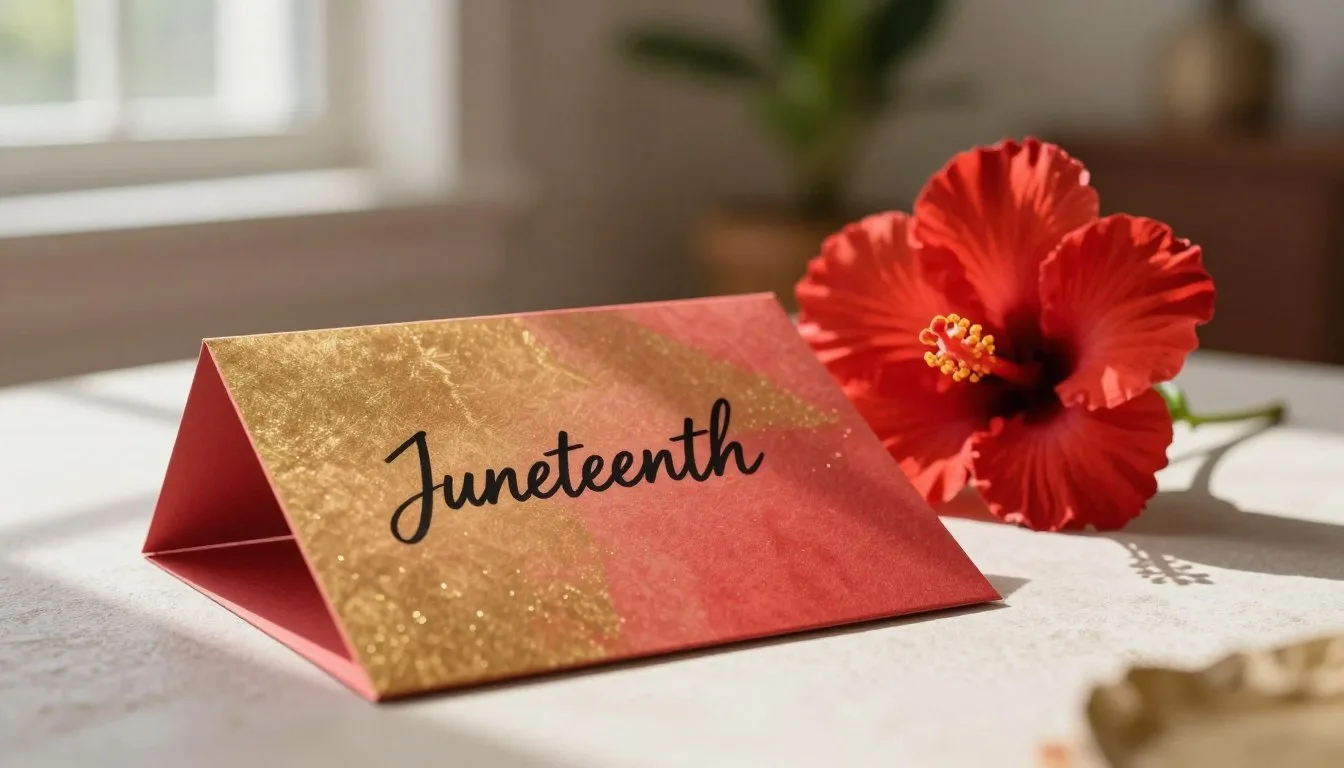
Juneteenth wishes are thoughtful messages that honor Black freedom, remember history, and recognize the work still ahead. A meaningful greeting can also express hope without treating the day as only a cheerful occasion.
You may be choosing words for a family card, a quick text, or a post for friends. Each setting calls for a slightly different tone, but care matters in all of them.
The examples ahead can help you find language that feels warm and grounded. Adapt them for cards, texts, and social posts, or use them to shape your own words.
Choose wording that reflects both celebration and remembrance.
What Is Juneteenth’s History and Meaning?
Juneteenth marks the moment freedom was announced to enslaved people in Texas on June 19, 1865. Its meaning includes both the joy of freedom and the long struggle that followed.
The announcement in Texas came after the Emancipation Proclamation took effect, but before the 13th Amendment ended slavery nationwide. The three events mark separate steps in a longer history.
Juneteenth history: the long road from the Emancipation Proclamation to Galveston
The Emancipation Proclamation took effect on January 1, 1863. It declared enslaved people free in areas rebelling against the United States, but Union forces could enforce it only where they had control.
That difference matters. A federal order could declare freedom, while slavery continued in places where Union troops had not yet arrived.
A written promise of freedom could not enforce itself; Union troops had to reach the places covered by the order.
The 13th Amendment was ratified in December 1865. It abolished slavery throughout the United States, extending beyond the areas covered by the earlier order.
What happened after General Granger arrived in Texas
On June 19, 1865, Union Brigadier General Gordon Granger and his troops reached Galveston, Texas. They announced that enslaved African Americans in Texas were free.
That announcement came through General Order No. 3, the order announced in Galveston on June 19, 1865, declaring enslaved people in Texas free. It gave people news of freedom, though it did not erase the harm of slavery or the work ahead.
Juneteenth celebrations began in 1866, one year after the announcement. The name combines “June” and “nineteenth.”
The holiday’s meaning rests on a people’s struggle for freedom, not one moment alone. Keep the dates distinct: the 1863 proclamation, the 1865 announcement in Texas, and the December 1865 ratification of the 13th Amendment mark different parts of emancipation.
Is Juneteenth a U.S. Holiday, and When Is It Observed?
Yes, Juneteenth is a U.S. federal holiday observed each year on June 19. The date honors the day freedom was announced in Texas, and the calendar date stays fixed.
Juneteenth National Independence Day is a public holiday established for U.S. federal employees under federal law. In 2026, June 19 falls on a Friday.
Federal recognition gives the day a place on the national calendar. It does not set every private workplace’s schedule or require every school, store, or service to close.
Some employers may close or offer time off, while others may stay open. Schools and local services also set their own schedules, so the federal holiday does not promise a day off everywhere.
The name Juneteenth National Independence Day reflects the country’s recognition of this history. Its annual observance gives people a set date for reflection, celebration, and community events.
When you plan errands or travel, check the specific organization’s hours. A federal holiday can affect public offices, but it does not guarantee that a private business will close.
June 19, 2026, is a Friday, which may shape plans for a gathering or a long weekend. Check the specific school, workplace, or service schedule before assuming it will be closed.
Juneteenth Wishes for Every Relationship
A personal Juneteenth wish works best when it pairs warmth with respect for the day’s history. Choose a message that fits how well you know the recipient, and keep its meaning clear.
A sincere wish can celebrate freedom while recognizing the work still needed for justice. You can make these examples your own by adding a personal detail or a shared hope.
Wishes for family and close friends
For someone close to you, a personal touch can make a short greeting feel more thoughtful. Mention a shared value, a family story, or the kind of future you hope to build together.
- “Wishing you a Juneteenth filled with family, reflection, and the freedom our elders fought for.”
- “May today bring you time to celebrate Black joy and remember the people who made this day possible.”
Wishes centered on remembrance and freedom
A message focused on remembrance can honor the past without asking the recipient to feel only one way. These lines suit a card or note when you want history to stay central.
- “Today, I’m honoring the lives and strength behind this hard-won freedom.”
- “May Juneteenth remind us to protect freedom and make room for every person’s full humanity.”
Hope can sit beside honest reflection. You might also draw inspiration from Opal Lee, who said, “We have simply got to make people aware that none of us are free until we’re all free.”
- “May the hope we share today lead to fairer choices in our homes and communities.”
- “Let’s honor this day by building a country where freedom belongs to everyone.”
Coretta Scott King said, “Struggle is a never-ending process. Freedom is never really won; you earn it and win it in every generation.” These words can inspire your own message without replacing a personal note.
Juneteenth wishes for 2022 can also work in other years if you remove any year-specific wording. Before sending a message, make sure its tone fits your relationship with the recipient.
Juneteenth Messages for Cards, Work, and Community
A workplace message can be warm and respectful without assuming everyone observes the day in the same way. For a group, plain and thoughtful words often work better than a speech.
Federal-holiday status does not set a private employer’s closure policy. Juneteenth National Independence Day is a public holiday established for U.S. federal employees under federal law.
Messages for cards and texts
Short messages suit cards and texts when you want to mark the day without making the recipient answer a big question. A specific thought can keep a simple note from feeling automatic.
- “Thinking of you today as we honor the history and meaning of Juneteenth.”
- “Wishing you a day with space for reflection, community, and Black joy.”
Messages for workplaces and community gatherings
Workplace and event notes can name the day’s meaning without speaking for every person in the room. These examples also suit a community program or an event invitation.
- “Today, we honor Juneteenth and the continued work for freedom and justice.”
- “Join us in recognizing this day through learning, reflection, and community.”
Messages children can understand
Children deserve clear words about slavery and freedom, rather than a vague lesson about being kind. Keep the message direct, then invite questions that fit the child’s age.
- “Juneteenth remembers when enslaved people in Texas learned they were free.”
- “We honor the people who fought for freedom and keep working for fairness today.”
A child may ask why the announcement came after freedom was declared. You can explain that news and Union troops reached Texas later, and freedom still required protection.
For a group note, choose inclusive wording that leaves room for reflection as well as celebration.
A strong social caption can be brief while still making clear what the day asks you to remember. A few carefully chosen words can name remembrance, Black joy, or the work for equality.
Use readable text and images that do not trivialize the holiday. A caption does not need to explain the full history to show respect.
Keep the text easy to read on a phone, with enough contrast between the words and the background. Choose an image that supports the message rather than turning the day into a decorative theme.
- “Remembering the people behind this day.”
- “Black joy belongs in every chapter.”
- “Freedom calls for care and action.”
- “Honoring history, supporting change.”
- “A day for truth, hope, and progress.”
- “Celebrating freedom while doing the work.”
You can also share a quotation with its speaker named. James Brown said, “Say it loud. I’m Black and I’m proud!”
Maya Angelou wrote, “You may kill me with your hatefulness. But still, like air, I’ll rise.” Her words can speak to strength, but the image should not turn pain into a slogan.
One focused idea is often enough for a social post. Check that the image and caption communicate respect when viewed without extra context.
Juneteenth Quotes About Freedom, Justice, and Hope
A good quote for June can connect freedom to the choices people still make for justice and equality. The words need not have been written for Juneteenth to fit its meaning.
Keep every quotation with its speaker’s name and use it in context. These Juneteenth quotes offer different ways to think about freedom, struggle, and progress.
Quotes about freedom and liberation
These lines connect freedom to struggle and to the people who remain excluded when liberty reaches only some. Frederick Douglass’s words make a strong choice for a June message: “If there is no struggle, there is no progress.”
- Frederick Douglass said, “If there is no struggle, there is no progress.” The phrase “there is no progress” is an excerpt from that same line.
- Fannie Lou Hamer said, “Nobody’s free until everybody’s free.” Her words keep liberation tied to everyone’s freedom.
- Nelson Mandela said, “No one is born hating another person because of the color of his skin.” The excerpt “the color of his skin” points to the harm of learned hate.
Quotes about justice and responsibility
Justice asks people to notice harm beyond their own place or group. Martin Luther King Jr.’s words suit a message about shared responsibility and equal rights.
- Martin Luther King Jr. said, “Injustice anywhere is a threat to justice everywhere.” The phrase “a threat to justice everywhere” is a short excerpt from his quote.
- Frederick Douglass said, “If there is no struggle, there is no progress.” His line links change with continued effort.
- Fannie Lou Hamer said, “Nobody’s free until everybody’s free.” The quote rejects freedom that leaves people behind.
Quotes about hope and progress
Hope does not require pretending that every effort succeeds. Maya Angelou’s words name resilience, while Nelson Mandela’s quote points toward a world beyond hate.
- Maya Angelou said, “We may encounter many defeats but we must not be defeated.” The excerpt “we must not be defeated” holds the line’s note of hope.
- Martin Luther King Jr. said, “Injustice anywhere is a threat to justice everywhere.” The quote can frame progress as a shared duty.
- Nelson Mandela said, “No one is born hating another person because of the color of his skin.” His words hold space for change.
For a short June post, Frederick Douglass’s line about struggle and progress is a clear choice. A quote can fit Juneteenth without having been written for the holiday.
Keep the speaker’s name with every quotation so the words are not detached from their context.
What Do Juneteenth Colors, Food, and Symbols Mean?
Juneteenth has recognizable colors and symbols, but no single outfit or menu is required to honor the day. The Juneteenth flag uses red, white, and blue, with two stars that carry meaning.
Red, white, and blue or red clothing can be a meaningful choice, not a required uniform. Families and communities mark the holiday in different ways.
Juneteenth colors, shirts, and the flag
The Juneteenth flag represents formerly enslaved people in Texas as American citizens. Its five-point star represents Texas, while the larger star represents the spread of freedom.
Ben Haith designed the flag in 1997, and Lisa Jeanne Graf later revised it. Its colors also resemble the U.S. flag, linking the struggle for freedom to American citizenship.
The African Liberation Flag is different. Created in 1920, it uses red for struggle and sacrifice, black for Black people, and green for Africa’s natural wealth.
Juneteenth shirts may use the holiday’s colors or flag, but clothing choices vary. No one needs a special shirt to take part respectfully.
Traditional foods and red drinks
Red foods and drinks often appear at Juneteenth gatherings. Red has ties to sacrifice, transition, and power in Yoruba and Kongo cultures connected to these food traditions.
Examples include watermelon, strawberries, red velvet cake, barbecue, hibiscus tea, and strawberry soda. A menu from the National Museum of African American History and Culture includes cherry cobbler, red beans and rice, and cherry-cola barbecue sauce.
That menu also includes stewed okra with tomatoes and corn, plus barbecue chicken. These dishes show how a gathering can bring together foods beyond red-colored treats.
What Juneteenth gatherings can include
Celebrations have included parades, family reunions, speeches, and foods and drinks with red coloring. A local event may focus on music, learning, shared meals, or time with family.
No single tradition represents every household. Ask your hosts what the event will include if you are joining a gathering for the first time.
Treat colors and foods as cultural signals with meaning, not as decorations stripped of their history.
Yes, you can say “Happy Juneteenth” when the greeting comes with genuine respect for the history and its meaning today. The words feel most honest when they leave room for both joy and reflection.
Respectful participation centers the people and communities whose history the day honors. Juneteenth became a U.S. national holiday by law on June 17, 2021.
Debate can arise when people treat emancipation as a finished story or turn remembrance into an empty celebration. Barack Obama described Juneteenth as “a celebration of progress” and affirmed that work remains.
If you are not Black, learn about the history, listen to Black people, and support community-led events. Avoid making your own role the center of someone else’s observance.
Progress and unfinished work can exist at the same time; neither cancels the other.
Let the people and communities whose history the day honors guide how you take part.
Conclusion
The most meaningful Juneteenth message is one that recognizes both the joy of freedom and the history behind it. A thoughtful greeting can hold hope alongside honest remembrance.
Choose one message that fits the person receiving it, then pair your words with action. You might listen, learn, or attend a community-led event.
That small choice can help connect a greeting to justice and shared humanity. Choose the words that feel sincere, then make time to learn from the community and history you are honoring.