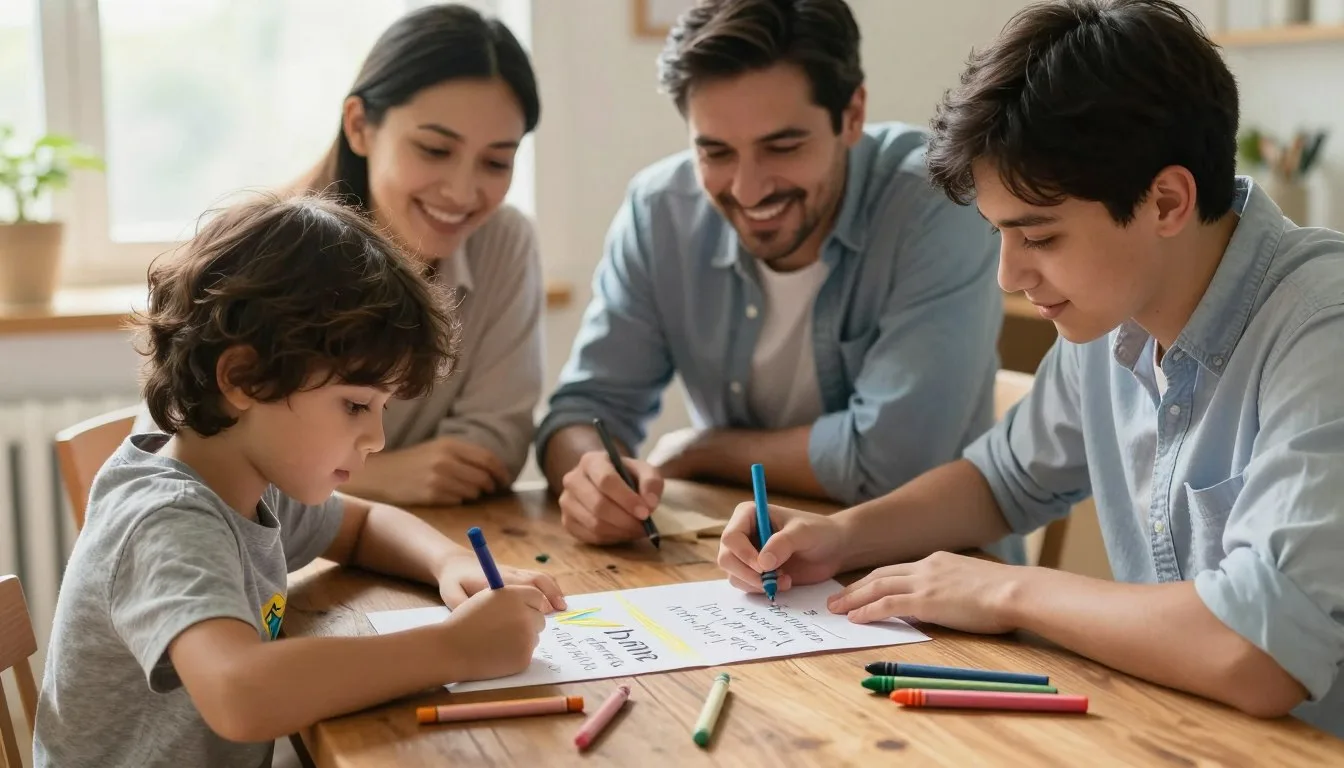
The best Father’s Day wish is a short, specific note that reflects your relationship and tells him what you appreciate. A father figure is someone who gives care, guidance, or support in a father-like role. The right words can suit a parent, stepdad, grandpa, or another important person in your life.
You might need a line for a card, a quick text, or a greeting shared with family. A little detail can turn a familiar phrase into something that feels like yours. These examples are starting points, not scripts you need to copy word for word.
Choose a tone that fits the person and the bond you share. Your note can be warm, funny, quiet, or full of love. It does not need to sound grand to matter today. A few honest words can honor the time he gives and the ways he has shaped your life.
Choose a line that sounds like something you would genuinely say.
How Do You Write a Father’s Day Card Message That Sounds Personal?
A strong card message thanks him for one real thing, recalls a shared moment, names a quality you admire, and ends with love. These four moves make a personal note without forcing you to write a long speech.
One or two specific details usually feel more personal than a string of broad compliments. Keep the words true to your bond, whether you write to Dad, a stepdad, or another father figure.
Choose details that could not belong to just anyone. A real moment or action gives your message its own voice.
Start with one true thank-you
Begin with a clear thanks for something he did. “Thanks for always being there” may be true, but a specific reason gives it more meaning.
You could thank him for helping you move, checking in before a big test, or making time for a weekly call. A sincere father day message does not need to cover every good thing he has done.
Add a memory or a quality you admire
Choose a moment you both remember, such as a rainy drive to a game or a meal he taught you to cook. Then name a quality that memory shows, like patience or a quick sense of humor.
Instead of writing, “You are a great dad,” try, “I still think about how you stayed up to help me finish my science project.” The detail lets him picture the moment.
Finish with a direct, warm closing
End in words that feel natural between you. “Love you,” “I’m glad you’re my dad,” or “Hope you have a great Father’s Day” can all fit.
Here is a simple template: “Thanks for [specific action]. I still remember [shared moment], and I admire your [quality]. Love, [your name].” Use only the parts that sound like you.
The best message is the one that feels true to your relationship, even if it is brief. Before signing, replace any detail that could fit anyone with one only your family would recognize.
What Are the Best Father’s Day Wishes for a Short Card?
The best short wish is one honest sentence that says what you value about him. For a card, text, or social post, one sentence usually gives enough room to sound warm and clear.
A direct line such as “Dad, I love you and appreciate all you do” says he is loved and valued. Change “Dad” to the name you use at home, whether that is Papa, Baba, or another familiar name.
Here are five short messages with different feelings behind them. Add a name or a small detail if you want the line to sound more like your family.
- Happy Father’s Day, Dad. Thank you for always making time for me.
- I’m proud to be your child, and I hope you know how much I admire you.
- Love you, Dad. Life is better with you in my corner.
- Thanks for teaching me how to fix a flat tire, and for staying patient while I learned.
- Happy Father’s Day to the best dad for me. I’m lucky to have you.
These Father’s Day wishes in English use everyday words, so they work for a handwritten card or a quick message. A short greeting can still feel meaningful when it sounds like your own voice.
If you want short, meaningful Father’s Day messages, choose a line that names one feeling or one thing he does. Avoid adding extra praise just to make the card longer.
Read the line aloud once and keep it if it sounds like you.
Which Heartfelt Messages Express Gratitude Without Sounding Generic?
A heartfelt message feels genuine when it thanks him for a real action, lesson, or quality. Specific thanks can make a few plain sentences matter more than polished praise.
A meaningful note can be two or three sentences long. Name one thing he did, then explain briefly why it stayed with you.
Use one of these message starters, then add a concrete detail that belongs to your relationship.
- “Thank you for guiding me when I had to make a hard choice.” Add the choice or the words he shared.
- “I’m grateful for your patience when I needed time to learn.” Name the skill, task, or stage of life you remember.
- “Thank you for showing up in the small ways every day.” Mention a ride, meal, call, or quiet check-in.
- “I’ve learned a lot from the way you treat people.” Point to a quality, such as kindness, honesty, or calm.
“Thank everything” may feel too broad on its own. You can make the thought more personal by choosing one moment from the many things you appreciate.
A role model does not have to be perfect. You might admire how he keeps his word, admits a mistake, or makes room for others.
For example, you could thank him for the wisdom he shared during a tough year, then name one piece of advice you still use. That small detail gives your love a clear shape.
Let your own voice set the tone. A quiet sentence may fit better than a grand statement, especially if you usually speak plainly with each other.
Name the quality you admire in plain words rather than piling on superlatives.
What Funny Father’s Day Messages Suit a Dad Who Likes Jokes?
If he enjoys a groan-worthy pun, a playful line can make his card feel like part of your shared banter. Gentle teasing works best when he would enjoy the joke, too.
A joke can be one punchline or a two-sentence setup and payoff. Keep it light, and do not turn a strained relationship or a sensitive subject into the punchline.
Try one of these funny Father’s Day messages for a dad who likes silly humor. Adjust the wording to match the jokes he tells at home.
- Happy Father’s Day! Thanks for all your advice, even the parts I pretended not to hear.
- You taught me everything I know about dad jokes. I’m sorry to report that it worked.
- To the best dad: I would have picked you, too. Good thing I didn’t have to.
- Thanks for fixing things around the house, including the jokes that needed no fixing.
- Happy Father’s Day! Your jokes are so corny, they deserve their own garden.
Familiar advice can make a good joke, especially if he repeats the same line every time you leave the house. Keep the tease fond rather than sharp.
A card can also joke about a long-running family habit, like his insistence on saving every twist tie. A small, kind detail feels more personal than a joke anyone could use.
Humor may not fit every dad or every year. A sincere note is a better choice if you are unsure how he will take a joke.
Use a joke only if he would laugh along with you.
What Can a Daughter or Son Write to Dad?
A daughter or son can make the message personal by naming one way Dad helped shape who they are. A shared memory or a lesson can express love without assuming every parent-child bond looks the same.
A one- or two-sentence note can hold both thanks and affection. The right words may come from childhood, adult life, or an everyday moment you still remember.
Messages from a daughter
A daughter might write, “Watching you handle hard days taught me to stay steady. I still look up to you, even as I build a life of my own.”
For a lighter note, try, “Dad, I’m grateful for our long talks and your very honest opinions about my cooking.” A specific memory can make that line feel like yours.
Father’s Day wishes from a daughter do not need to sound formal or sentimental. You could say, “I love how you still show up for me, whether I need advice or just someone to listen.”
If you share a favorite trip or family tradition, mention one small part of it. The sound of a song in the car or a stop for snacks may bring the memory back.
Messages from a son
A son can recognize a lesson, a kind act, or steady support. For example: “Thanks for teaching me to keep my word. I think of that lesson whenever I make a promise.”
Another option is, “I appreciate how you make time to check in, even when life gets busy. Those calls mean a lot to me.” This wording suits a son who wants a warm but simple father day message.
You can also focus on a quality you admire, such as a calm approach to problems or the way he listens. A message does not need to match old ideas about what sons or fathers should say.
Use the words that feel natural between you, then add a detail he will recognize. Choose a memory or lesson that belongs to your relationship, not a line that depends on a stereotype.
What Should You Write to Your Husband on Father’s Day?
A partner’s note can celebrate not just the father he is, but the care he brings to your family every day. Small acts often say more than praise that could fit any household.
You can write in your own voice or sign the card for the children. Mention a moment of care, a co-parenting effort, or the bond he shares with the kids.
A message from a partner
You might write, “I love how you make bedtime feel calm, even after a long day. Our family is lucky to have your steady care.” The bedtime detail gives the praise a real setting.
For Father’s Day wishes to my husband, you could also name a shared task: “Thank you for making breakfast while I got ready. I notice the ways you help our days run well.”
A first Father’s Day as a husband and dad can hold a special note: “Our first year as parents has brought plenty to learn, and I love watching you find your way with our baby.” This does not assume every family follows the same path.
If you share parenting duties, recognize one part of the work he takes on. A note about packing lunches, calming a child, or handling a late-night wake-up can feel more true than calling him perfect.
A message signed by the children
A card from the kids can use simple words: “Happy Father’s Day! We love playing with you and hearing your silly stories.” If they are young, you can help them choose a favorite shared activity.
For a warmer family note, try, “Thanks for cheering us on and making room for our ideas. We love being part of your team.” Change “we” to fit the words your children use.
A partner can add a short line in their own voice beside the children’s message. That lets him hear both the family’s affection and the care you see up close.
Sign as yourself, the children, or the whole family so he knows whose words he is reading.
What Can Children Say to a New Dad or Their Own Father?
For a child, the sweetest message may be a simple sentence about what they love doing with Dad. One small detail can help a young writer feel part of the card.
A first Father’s Day marks a new family milestone. Children can dictate a message, copy a short line, or finish it with an activity they enjoy together.
Use one of these four short options, and let the child fill in the blank.
- “I love when we ______ together.”
- “You make me happy when you ______.”
- “Thank you for helping me with ______.”
- “I love you because you are ______.”
A child can add a favorite activity, a reason they love him, or a funny family moment. The message can be spoken aloud while an adult writes it down.
For a new dad, try: “Your first Father’s Day is a lovely reason to celebrate. We are learning together, and I love seeing the bond you are building with our child.”
Families can adapt a shared line such as, “Happy Father’s Day from all of us. We love the care you bring to our family.” Change the words to fit the people signing together.
A small child may want to draw a face, a house, or a favorite toy beside the words. Let a young child add a drawing or dictated phrase so the note feels like theirs.
What Messages Fit a Stepdad, Grandpa, or Other Father Figure?
The best message for a father figure names the way he showed care, rather than focusing on a title or biology. His real role matters more than a label.
A father figure may be a stepdad, uncle, coach, mentor, or another trusted person. Match the warmth of the note to the closeness you share.
A stepdad or father figure who showed up
You could write, “Thank you for being someone I can count on. I appreciate the time and care you have given me.” This stays warm without making claims about a bond that may still be growing.
For a stepdad who has been part of your life for years, try, “I’m grateful for the ways you have supported me, from school days to big decisions.” Name one moment that shows what his support looked like.
A coach, uncle, or mentor may also be a father figure. A simple note could say, “Your advice helped me trust my choices, and I’m glad you took the time to guide me.”
A grandfather’s card
A note to Grandpa can focus on the time you share: “I love hearing your stories about our family. Thanks for making room for me in your day.”
You might mention a meal he makes, a game you play, or a family tale he tells often. That small sign of recognition can make a grandfather’s card feel personal.
A brother or friend who is a dad
A Father’s Day wish to a friend can recognize both his friendship and the care he gives his children. Try, “I’m glad to have you as a friend, and it’s great to see the patience and fun you bring to being a dad.”
For a brother, mention a quality you have seen as he raises his family. “You bring so much humor to the busy days with your kids” feels more specific than a broad claim about being the perfect dad.
Use the name or family title the recipient is comfortable with.
What Are 10 Affectionate Names for a Father?
The right name for a father is the one that feels natural in your family, not a title that has to fit everyone. There is no universal top-ten ranking, but these ten forms offer familiar options.
Family preference matters more than any list’s ranking. A name may feel affectionate in one home and unfamiliar in another.
Familiar names in English and South Asian families
Daddy, Dad, and Dada are common choices in many households. BabyCenter’s community ranking puts those three at the top, but it does not set a rule for every family.
- Daddy and Dad are familiar forms in English-speaking homes.
- Dada is used in many families as a warm name for a father.
- Baba appears in many cultures, including China and Pakistan.
- Papa is a familiar affectionate form used by many families.
- Papi is common in Spanish-speaking households.
Names used in other languages and cultures
Families also use names shaped by language and local custom. The same sound can carry different meaning across homes, so follow the name your own family uses.
- Tato is a Ukrainian form, while Vati is German.
- Tad is Cornish, and Da is Welsh and Gaelic.
- Baba is used in many cultures, including China and Pakistan.
- Papi is common in Spanish-speaking households.
- Dada and Papa may feel right in families with different traditions.
These examples include ten affectionate options: Daddy, Dad, Dada, Baba, Papi, Tato, Vati, Tad, Da, and Papa. The list groups forms by familiar use, not by which name is best.
If your family uses more than one language, the name may shift between relatives or settings. A card can use the name he hears from you most often.
If you are unsure, use the name he already responds to at home.
What Are the Seven Types of Dads?
A simple way to describe a father is a parent who helps care for and guide a child. Seven common qualities can help you name the kind of care you value in your own dad.
The seven labels are responsible, thoughtful, nurturing, affectionate, interactive, sharing, and providing. They describe fathering qualities, not a test or a ranking.
A guide based on research and consultation with dads in Australia describes these styles. It draws on a 2009 guide and a 2019 national survey.
Care and connection
A responsible dad follows through and takes his role seriously. A thoughtful dad notices what a child may need and responds with care.
A nurturing father helps a child feel safe, while an affectionate one shows love through words, touch, or small acts. Families express affection in different ways, so the form matters less than the care behind it.
An interactive dad joins in. He may play a game, ask about school, or put down his phone to listen during a conversation.
Guidance and provision
A sharing father makes time, attention, or household duties part of family life. He treats care as something to take part in, not just something to praise.
A providing dad helps meet a child’s needs. That can include practical support, such as meals and a safe home, along with help during hard moments.
These descriptions can overlap, and no father has to match every label. The words simply give you a way to notice what he brings to your family.
You might admire his thoughtfulness more than his advice, or value his steady support over grand gestures. Pick the quality that genuinely describes him when choosing what to praise in a card.
Which Father’s Day Quotes Work in a Card?
A well-chosen quote can give a card a memorable line, especially when you pair it with a personal note. A short quote works best when its meaning fits your relationship.
Choose a quote for the feeling it carries, then add your own words around it. A sentence about a shared moment can make a familiar line feel less distant.
Quotes about belief, guidance, and growing up
Jim Valvano wrote, “My father gave me the greatest gift anyone could give another person: He believed in me.” This line suits a card about trust or encouragement.
Tim Russert wrote, “The older I get, the smarter my father seems to get.” It offers a warm way to reflect on advice that made more sense with time.
Clarence Budington Kelland wrote, “My father didn’t tell me how to live; he lived, and let me watch him do it.” Use it when you want to recognize lessons shown through action.
These Father’s Day quotes can stand alone, but a personal sentence gives the card a clear link to your own life. You might name the advice you remember or the moment when his support mattered.
A light quote for a funny card
Steve Martin wrote, “A father carries pictures where his money used to be.” This line fits a light card about family life and the things parents keep close.
A quote can be a starting point rather than the whole message. Add a line about the photo, memory, or family joke that makes it feel right for him.
Quotes can sound different when read aloud than they do on a page. Check the attribution and wording before copying a quotation into a card.
How Can Families Celebrate Father’s Day in India in 2027?
In India, Father’s Day 2027 falls on June 20, so families can plan a greeting around the third Sunday in June. That date gives you time to choose a small celebration that suits your plans.
Father’s Day commonly includes cards and flowers, meals out, picnics, movies, or organized school and cultural programs. Pick an activity that feels comfortable for your family.
Match the greeting to a simple celebration
Some families mark the day with a card or flowers, while others plan dinner, a picnic, or a movie. Schools and cultural societies may also hold programs for Father’s Day.
A brief message can fit any of these plans. Write a few words in a card before a meal, or share a greeting during a picnic or family movie day.
- Give a card with a short personal note.
- Bring flowers home or choose them together.
- Share a meal at home or dine out.
- Plan a picnic or watch a movie as a family.
- Join a school or cultural society program.
Write an inclusive message for the day
A greeting for everyone can honor fathers and father figures without assuming every family has the same shape. You could write, “Wishing a warm Father’s Day to the fathers and father figures who offer care, guidance, and support.”
Families can adjust the words to include the people they want to celebrate. The message can stay simple while making room for different bonds and traditions.
Choose a celebration that leaves time for a relaxed conversation, not just a photo or a gift.
Leave room in the day for people to talk and enjoy each other’s company. A shared moment can matter as much as the plan around it.
Conclusion
A thoughtful Father’s Day wish does not need perfect wording to feel meaningful. One detail that belongs to your relationship can carry more warmth than a polished line with no personal meaning.
Choose a message that fits the person and the way you speak to each other. Add a memory, a specific thank-you, or a quality you value, then let the note stay as simple as it needs to be.
You do not need to cover every good thing he has done. Pick the one detail that comes to mind first, and make it clear enough that he knows why you chose it.
Add one true detail, sign your name, and send the message today.