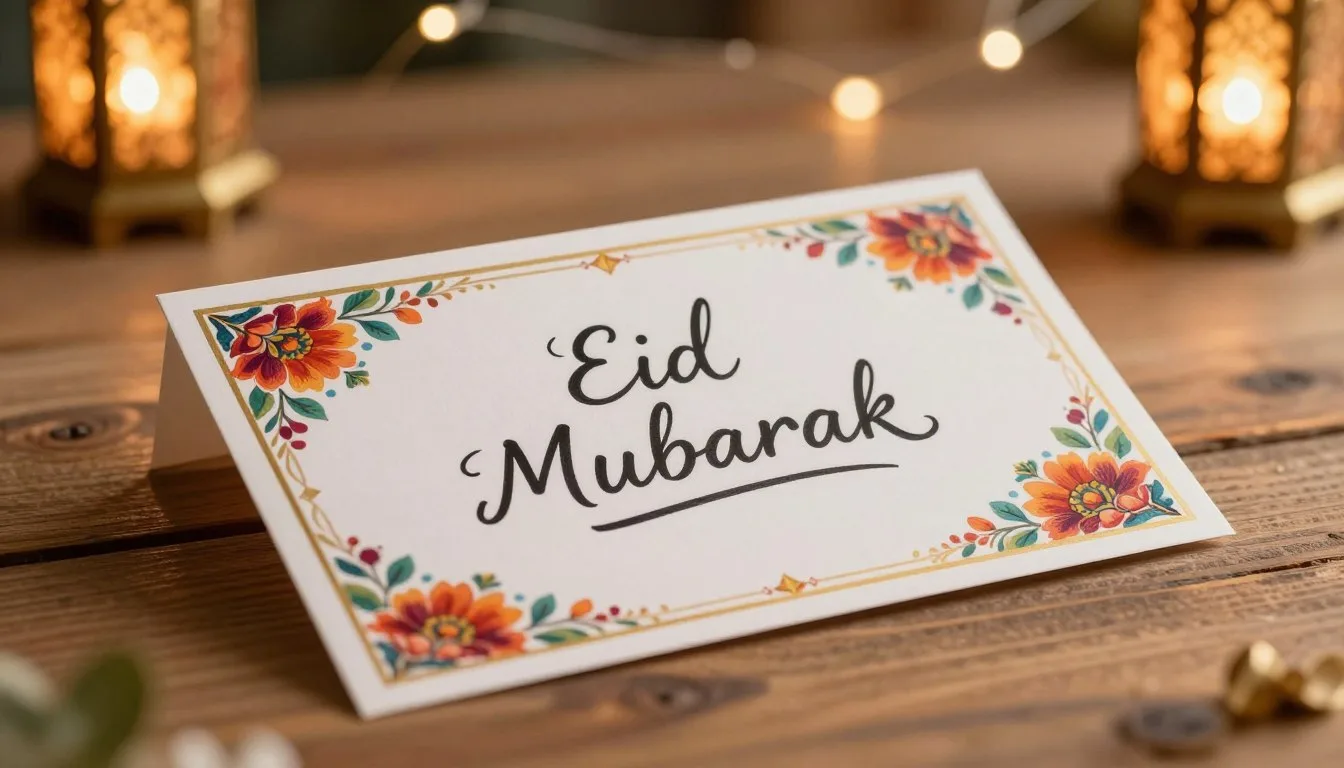
The best Eid Mubarak wishes are sincere, suited to the person receiving them, and easy to share. The right words can express gratitude, faith, and joy on a day of celebration.
Your message may go to family, friends, loved ones, or colleagues. A warm note can work in a text, a card, or a group chat, as long as it fits the person and your relationship. Here are original greetings you can copy and personalize, from brief lines to more heartfelt notes.
A small touch from your own life can make a familiar greeting feel like your own. Think of a shared moment, a kind quality, or a detail that makes the recipient smile.
What Is Eid and How Is It Celebrated?
Eid al-Fitr celebrates the end of Ramadan, while Eid al-Adha is a separate Eid later in the Islamic year. Both bring Muslims together for prayer, family, and gratitude, though each marks a different part of Islamic tradition.
Eid al-Fitr begins on the first day of Shawwal, after Ramadan. The Islamic calendar follows the lunar cycle, so Eid dates change from year to year. Crescent sightings can also mean different countries observe Eid on different dates. A predicted date for Eid in 2026 is not a universal confirmation; use the announcement from the relevant local authority.
A date prediction is not the same as a local moon-sighting confirmation. Use the announcement from the authority relevant to your community.
Eid al-Fitr falls on Shawwal’s first day and lasts one to three days, depending on the country. Eid al-Adha honors devotion and sacrifice; its usual length appears in section 11. A rakat means one unit of salah, or ritual prayer.
Eid prayer is a congregational prayer of two rakats. The number and place of additional takbeers differ among Islamic schools. In the Hanafi method, worshippers say three additional takbeers at the start of the first rakat and three just before ruku in the second.
In the Hanafi method described, the congregation prays after sunrise, then hears the khutbah. The khutbah is the sermon after Eid prayer. This order differs from Friday prayer, when the sermon comes before the prayer.
Muslims celebrate Eid around the world, with local customs shaping the day. Eid al-Fitr may include a special meal, visits, gifts, and time with family. Here are ten quick points to keep the basics clear.
- Eid means a recurring festival or celebration.
- Muslims observe two major Eids each year.
- Eid al-Fitr marks the end of Ramadan.
- Eid al-Adha honors devotion and sacrifice.
- The Islamic calendar follows the lunar cycle.
- Months begin with the sighting of a new crescent.
- Eid dates can differ between countries.
- Eid al-Fitr starts on the first day of Shawwal.
- Eid al-Fitr lasts one to three days in different countries.
- Eid prayer has two rakats, with school-based differences in takbeers.
If the date matters for a greeting, use the local announcement rather than relying on a global calendar prediction.
Eid Mubarak Wishes for Every Relationship
A message to a sibling can sound familiar and affectionate, while one to a colleague usually needs a more measured tone. Choose words that suit your relationship, then add a name or detail to make them feel like yours.
These Eid Mubarak wishes give you a starting point for family, friends, a partner, or coworkers. You can send a personal note by WhatsApp or write it inside a greeting card.
Wishes for Family
For family, a little warmth and gratitude can say more than a formal line. Mention what you value about being together, or name a family habit that makes Eid feel like home.
“Eid Mubarak, Mom. I’m grateful for your care and for every Eid memory we share. I hope today brings you peace and happiness.”
“Wishing our whole family a joyful Eid. May our home stay full of laughter, good food, and the comfort of being together.”
Wishes for Friends
Friends often appreciate a greeting that sounds like you, not a card copied word for word. Recognize the friendship, then keep the tone upbeat and easy.
“Eid Mubarak, my friend! I’m glad life brought us together. May your day be full of good food, bright moments, and plenty of reasons to smile.”
“Wishing you a happy Eid and a day that feels as fun as our best catch-ups. Let’s make time to celebrate soon.”
Wishes for a Partner
A message for a loved one can be intimate without relying on grand promises. A shared detail, such as a favorite meal or a quiet moment at home, makes your affection more personal.
“Eid Mubarak, my love. This day feels brighter with you beside me, from our first cup of tea to the last visit of the evening.”
“To the person who makes ordinary days feel special, I’m wishing you a beautiful Eid. I love the life we are building together.”
Wishes for Colleagues
At work, keep your message warm and respectful. A simple wish for a peaceful celebration is kind without assuming how someone observes Eid.
“Eid Mubarak, Aisha. I hope you and your family enjoy a peaceful day and a welcome break with the people you care about.”
“Wishing you a happy Eid and a restful celebration. May the day bring you time to enjoy what matters most.”
Add one detail only that recipient would recognize to make the message feel personal.
Short Eid Greetings for Texts and Cards
For a quick text, one sincere sentence is often enough. A short greeting can still feel personal when it sounds natural in your voice.
These short Eid Mubarak wishes in English suit WhatsApp, SMS, or a card caption. Pick a line that fits the moment instead of sending several versions of the same message.
- Eid Mubarak! May your day be filled with peace and joy.
- Wishing you a happy Eid and a celebration full of laughter.
- May Eid bring blessings to your home and happiness to your heart.
- Sending warm wishes for a peaceful and joyful Eid.
- May your Eid be bright, blessed, and shared with loved ones.
- Wishing you a beautiful day and a happy celebration.
Each line works as a short Eid Mubarak wish in English, whether you send it to one person or add it to a card. You can make it feel more direct by adding the recipient’s name at the start.
Choose the line that sounds natural in your own voice before sending it.
Heartfelt Messages for Difficult Moments
A greeting can acknowledge that someone is missed without asking them to set aside the reason they are absent. Let the person’s feelings lead, and offer care without pressing them to celebrate.
Distance, grief, or hardship can make a festive day feel mixed. A gentle Eid Mubarak message can leave room for both love and sadness.
When You Cannot Be Together
When travel or distance keeps you apart, say plainly that you wish you could be there. The message can still bring your warmth into their home.
“Eid Mubarak. I wish I could sit with you today, but I’m holding you close in my thoughts. May Allah keep you safe and bring us together soon.”
“We may be far apart this Eid, but my love and prayers are with you. I hope the day brings a few moments of comfort and joy.”
“I miss celebrating beside you. Please know I’m sending love across the distance, and I’m thinking of you and the family today.”
When Someone Is Grieving or Struggling
If someone is grieving or facing a hard season, avoid telling them to feel happy. You can recognize that Eid may be difficult and offer support without asking for details.
“I’m thinking of you this Eid. You don’t need to reply or put on a brave face. I’m here if you want company, a call, or a quiet visit.”
“I know this Eid may feel different. May Allah bring you comfort, and may the love around you help carry you through today.”
“Sending care to you and your family. I hope you find a little rest in the day, in whatever way feels right for you.”
Keep the wording gentle, and do not promise that grief or hardship will disappear.
Religious Greetings and Prayers for Eid
“Eid Mubarak” is a greeting meaning “Blessed Eid” or “Blessed Feast.” It is a cultural tradition, not a religious duty, so use it in a way that feels sincere to you.
Another common greeting is “Taqabbal Allahu minna wa minkum,” meaning “May Allah accept our good deeds and yours.” You can use this Arabic phrase or choose a simple English prayer.
These original examples include prayers for acceptance, peace, and blessings. They are personal greetings, not quotations from scripture.
- May Allah accept your good deeds and prayers, and grant you peace this Eid.
- May Allah fill your home with blessings and your heart with gratitude.
- May your faith bring you comfort, and may Allah bless you and your loved ones.
You can send a prayer in English, Arabic, or a language you share with the recipient. Keep the wording clear enough that it still sounds like something you would say aloud.
Use a prayer that feels sincere rather than adding religious language you would not normally use.
Eid Greetings in Urdu and Hindi
A short greeting in the recipient’s language can feel thoughtful even when the rest of the message is in English. Simple wording is easier to share with care, especially when scripts and spellings can differ.
The examples below offer Urdu and Hindi wishes with transliteration and English meanings. Greetings also vary across communities, so these phrases are useful options rather than one universal form.
Urdu Greetings and Replies
In Pakistan, Urdu-speaking communities traditionally begin Eid greetings after prayer. Newer generations may start at midnight. “Khair Mubarak” is a common reply in that context, returning the greeting with goodwill.
“عید مبارک”
Transliteration: Eid Mubarak
Meaning: Blessed Eid.
“آپ کو عید کی خوشیاں مبارک ہوں”
Transliteration: Aap ko Eid ki khushiyan mubarak hon.
Meaning: May the joys of Eid be yours.
“خیر مبارک”
Transliteration: Khair Mubarak
Meaning: A reply that returns the good wishes.
Hindi Greetings and Messages
Hindi greetings can use Devanagari script, though many people also write Eid phrases in English letters. You can choose the form your recipient reads most easily.
“ईद मुबारक”
Transliteration: Eid Mubarak
Meaning: Blessed Eid.
“आपको ईद की शुभकामनाएँ”
Transliteration: Aapko Eid ki shubhkamnayein.
Meaning: Best wishes to you for Eid.
“आपके घर में खुशियाँ और सुकून रहे”
Transliteration: Aapke ghar mein khushiyan aur sukoon rahe.
Meaning: May your home have happiness and peace.
Other greetings reflect local language and custom. In Turkey, people use “Bayramınız kutlu olsun” and “İyi Bayramlar,” rather than “Eid Mubarak.” “Selamat Hari Raya” is used in Indonesia and Malay-speaking communities in Malaysia, Brunei, and Singapore.
When you are unsure about a script or spelling, choose a phrase you can verify rather than guessing.
Eid Captions and Wishes for Images
A photo caption works best when the image and the greeting each have room to be noticed. Keep image text short and clear, so it adds warmth without covering the moment.
An Instagram caption can speak to the people who see your photo, while a WhatsApp status update may reach a smaller circle. These lines also work on greeting cards and shareable images.
Captions for Eid Photos
Choose a caption that fits what the picture shows. A family meal, a visit, or a quiet moment at home can carry its own meaning.
- Making Eid memories with my favorite people.
- A bright day, a full table, and grateful hearts.
- May Eid bring peace to every home.
For a card or digital image, choose a line that stands on its own. A wish for loved ones can feel warm without taking up much space.
- May Eid bring joy to you and your loved ones.
- Wishing you a day filled with love, peace, and happiness.
- May your Eid be bright with blessings and sweet moments.
These six original Eid captions suit different images, from a family gathering to a simple festive design. None needs a long explanation or a claim that it comes from a holy text.
Keep text brief enough to remain readable on a small phone screen.
Professional Eid Greetings for the Workplace
A professional Eid greeting can be warm without asking a colleague to share personal details. Keep the wording respectful and concise, whether you send it by email or WhatsApp.
A message can recognize the celebration without assuming how someone observes it. Use a greeting that feels friendly at work and leaves personal matters private.
For a colleague: “Eid Mubarak, Samira. Wishing you and your family a peaceful day and a joyful celebration.”
For a manager: “Wishing you a happy Eid and a restful break. May the day bring peace and good moments with those close to you.”
For a team: “Eid Mubarak to everyone celebrating. May your day bring happiness, and may the months ahead bring success and prosperity.”
These examples work in an email or a work chat, with a tone that stays warm but not overly familiar. A team greeting can include everyone without making one person speak for a whole community.
If you do not know whether someone celebrates, address the greeting to everyone celebrating rather than singling them out.
A simple “Eid Mubarak to everyone celebrating” is respectful in a mixed group chat. Offer the greeting on the recipient’s Eid, using the date recognized by their community.
If you are not Muslim, a kind greeting is still welcome. You can say “Eid Mubarak” or “Wishing you a happy Eid,” and let the person guide any further conversation.
In person, a smile and a warm greeting are enough. In India, Pakistan, and Bangladesh, some people greet after Salat al-Eid with a handshake, three hugs, and another handshake. Customs and comfort with touch differ, so follow the other person’s cues.
A short message can also include gratitude or a wish for kindness and peace at home. If you send a faith-centered line, such as “May Allah bless your family today,” choose words that feel natural for your relationship.
People may be focused on prayer or family, so a reply might not come quickly. Give them time without reading silence as a sign that your greeting was unwelcome.
- Use a simple greeting when you are unsure what to say.
- Address a mixed group with “everyone celebrating.”
- Follow the recipient’s lead on physical contact.
- Give people time to answer during a busy day.
Physical customs are not universal, even among people who share a community. Let the other person set the pace for a hug or handshake.
Let the other person set the pace for a hug or handshake.
Messages for Eid al-Adha
“Eid Mubarak” is appropriate for Eid al-Adha as well as Eid al-Fitr. Eid al-Adha falls in Dhul Hijjah, the twelfth month of the Islamic calendar, and typically lasts three days.
Eid al-Adha is usually observed for three days, though celebrations and customs can differ by community. The greeting works for both Eids, but naming the occasion can help when the recipient might not know which one you mean.
These messages focus on devotion, generosity, and time with family. Adapt one with a name or a detail that suits the person receiving it.
- May this Eid al-Adha deepen your faith and bring peace to your home.
- Wishing you a generous and joyful Eid, shared with the people you love.
- May your devotion inspire kindness, and may blessings reach your family.
- May Eid al-Adha bring your loved ones together in gratitude and peace.
Name Eid al-Adha when the recipient might otherwise confuse which celebration you mean.
Conclusion
A thoughtful Eid greeting can be simple, personal, and easy to share. The best wording fits your relationship and gives the recipient a sense of care, not pressure to respond in a certain way.
Choose an example, add the recipient’s name or a shared detail, and send it through a channel they use. A familiar phrase often feels more meaningful when it carries one small sign that you know the person well.
Choose one line, make it your own, and send it to someone you want to remember this Eid.